วันพุธที่ 11 มกราคม พ.ศ. 2555

Tablet for students


ablet PC plan under fire again

Published: 9/01/2012 at 12:00 AMNewspaper section: News

The government's controversial "One Tablet PC Per Child" policy is being piloted in five schools despite a study suggesting it could have negative impacts on the recipients.


Woravat: Handed out 600 tablet PCs

The government had decided the device will be distributed as promised, regardless of the results of the study, said Amnuay Sunthornchot, head of the Khaniyom Pheu Srang (values for building the nation) Chat Club.

He opposes distribution of the device to Pathom 1 (Grade 1) students, as he believes the children will probably use it for entertainment purposes rather than to aid their studies.

Education Minister Woravat Au-apinyakul handed out 600 tablet PCs to about 500 Prathom 1 and 4 students in five pilot schools to study the potential impacts of the devices on pupils.

The five schools chosen for the pilot are Rachawinit School in Bangkok, Anuban Lampang School in Lampang, Anuban Phangnga School in Phangnga, Sanambin School in Khon Kaen and Srinakharinwirot University Prasarnmit Demonstration School in Bangkok.

Srinakharinwirot University has been conducting a study of the pilot scheme.

"The study has no benefit," Mr Amnuay said.

"If the study finds the project has a negative impact on students, what will the government do next?" he asked.

The government had said the project would go ahead anyway, so the study was a farce, he said, adding the pilot schools should have been selected from different environments so as to get an idea of the impacts across a cross-section of society, but all five pilot schools are located in urban areas.

Khaniyom Pheu Srang Chat Club also conducted a survey on the tablet policy, seeking the views of 407 parents, teachers, Chulalongkorn University students and pupils from Triam Udom Suksa School and Triam Udom Suksa Pattanakarn School in Bangkok and Benchamarat Rangsarit School in Chachoengsao.

It found that 94.1% disagreed with distributing tablet PCs to Prathom 1 pupils because of their very young age.

Surveying the students' computer-use behaviour, 74.9% of all computer time use was found to be for entertainment purposes and only 25.1% for learning.

"They mostly use a computer for visiting Facebook and playing the Angry Birds game," he said.

But Mr Woravat is insisting the project will go ahead, saying the first batch will be given out in the next academic year.

There are more than 800,000 Pathom 1 students across the country but the first batch of tablet devices will go to about 470,000 students.

Of them, 345,000 pupils are under the Office of Basic Education Commission and 125,000 belong to the Office of Private Education Commission.

Chanwit Tabsuphan, secretary-general of Opec, said that 125,394 out of a total 175,000 Pathom 1 students in private schools will be given the device in the next academic year.

5th Q.C (Quality Control Test)

T. Steve was reading 5th Q.C (Quality Control) questions to the G. 10 students on Monday 9th January 2012.  There were 10 topics from 4 subjects including Mathematics, Science, English Language and Social Studies.


T. Anthony was reading 5th Q.C (Quality Control) questions to the G. 11 students on Monday 9th January 2012.  There were 10 topics from 4 subjects including Mathematics, Science, English Language and Social Studies.


Congratulations

Pasuree Yodsaneha G. 10C gets the highest score for Basic Japanese ( 97 ) and also Additional Japanese ( 97 ) from the first semester academic year 2011.Congratulations!


Highlightins


Araya Rungwiraprakay G. 11C used 4 colours strategy on her notebook. Here are the strategy's rules:
1 Hightlighter: using a hightlighter to hightlight a main topic.
2 Red pen: using a red pen to circle keywords.
3 Black pen/pencil: using a black pen/pencil to underline meanings of those keywords.
4 Blue pen: using a blue pen to write meanings or details which are not inside the books.


Mind Mapping

Pakhwan Srirattana G. 11A  drew a neat Mind Mapping for Mathematics. This Mind Mapping was also a part of Test 3. Well done Pakwan!!!


Nichanan Prapavisuti G. 11D  drew a explicit Mind Maping for Mathematics. This Mind Maping was also a part of Test 3. Statistics isn't too hard right?!!


Assignments

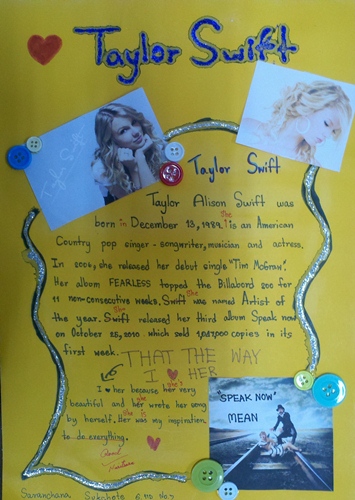
These assignments belong to Sirinan Boonpratuang, Saranchana Sukchote G. 11D and Onanong Rayaphet G. 11C.


These word cards were made by G. 10D students. They also translated into Thai in th back of those word cards. Incredible works for Chinese class!!


เทคนิคจำแม่น!! จำให้เป็นภาพ


     วันนี้มีเคล็ดลับการเรียนดีๆ มาฝากน้องๆ เหมือนเดิม ใครที่มีปัญหาเรื่องความจำ ท่องหนังสือไม่เคยเข้าหัว ลองสำรวจตัวเองดูว่า ปกติเราท่องจำหนังสือยังไง ท่องจากหนังสือที่เป็นพารากราฟยาวๆ? ท่องจากเลคเชอร์โน้ตของตัวเอง? หรือท่องจากชีทอาจารย์ที่ให้มาหนาเตอะ!!
              การท่องจำจากหนังสือ หรือเอกสารที่มีตัวหนังสือล้วน เชื่อมั้ยว่า เป็นการจำที่เปลืองสมองเรามากๆ เพราะมันไม่มีแรงดูงดูดที่ทำให้เราจดจำง่ายขึ้นเลย ดังนั้น วันนี้พี่มิ้นท์จะบอกวิธีเจ๋งๆ โดยการดึงเอาจินตนาการออกมาใช้ร่วมกับความจำ นั่นก็คือ การจำด้วยภาพนั่นเอง 

              การจำด้วยภาพ เป็นการจำที่ใช้จินตนาการผสมกับความรู้สึกนึกคิด ทำให้การจำแม่นยำขึ้น ต่อให้เป็นคนไม่มีจินตนาการแค่ไหน เทคนิคก็ยังใช้ได้ผล 100% ซึ่งเทคนิคนี้ก็คือ การแปลผลจากข้อความออกไปเป็นรูปภาพที่เกี่ยวข้องกับเนื้อหา ถ้าใครอินมาก อาจะใช้รูปภาพถ่ายทอดเป็นเรื่องราวเลยก็ได้
             เพื่อเป็นการยืนยันผล พี่มิ้นท์มีแบบทดสอบสนุกๆ ให้ทำค่ะ 

         กติกา   ข้อ 1) มองรูปนี้เพียง 3 วินาที แล้วจดใส่กระดาษดูว่าจำรูปไหนได้บ้าง
เด็กดีดอทคอม :: เทคนิคจำแม่น!! จำให้เป็นภาพ
     รูปที่ 1 มีอะไรบ้าง   1........ 2.......  3....... 4.......

        ข้อ 2) กติกาเดิม มอง 3 วินาที แล้วจดออกมาว่ามีอะไรบ้าง
เด็กดีดอทคอม :: เทคนิคจำแม่น!! จำให้เป็นภาพ

   รูปที่ 2 มีอะไรบ้าง  1....... 2........ 3........ 4........
         แบบทดสอบข้างต้น พี่มิ้นท์ลองแยก "รูปภาพ" และ "ตัวอักษร" ออกจากกัน น้องๆ พอจำความรู้สึกในการจำรูปทั้งสองได้มั้ยคะ ว่าภายในเวลา 3 วินาที สามารถจำรายละเอียดของรูปไหนได้มากกว่ากัน พี่มิ้นท์เชื่อว่าหลายคนมองผ่านรปในข้อ 1) แว๊บเดียวก็สามารถจำได้แล้วว่ามีอะไรบ้าง โดยไม่ต้องท่องด้วยซ้ำ ถึงเวลาเขียนแค่นึกความรู้สึกว่าอะไรวางอยู่ตรงไหน ก็สามารถจำได้แล้ว
         ส่วนข้อ 2) ก็จำได้เหมือนกัน แต่ต้องท่องทวนซ้ำอย่างน้อย 2-3 รอบ ถึงจะลงมือเขียนได้ แต่ข้อสรุปนี้ อาจจะง่ายเกินไป เพราะจำนวนสิ่งของมีน้อย ลองมาพิสูจน์อีกครั้งกับรูปภาพนี้

        ข้อ3) ให้เวลา 10 วินาที จำว่ามีอะไรบ้าง และเขียนออกมา
เด็กดีดอทคอม :: เทคนิคจำแม่น!! จำให้เป็นภาพ

        รูปที่ 3 มีอะไรบ้าง  1.........  2......... 3.......... 4........... 5..........
                             6.........  7.........  8........... 9........... 10.........
         จากรูปภาพข้างบนมีทั้งหมด 10 ข้อ จำได้เท่าไหร่กันบ้างเอ่ย?? ถ้าใครจำได้ถึง 10 ต้องปรบมือให้เลยล่ะ เพราะมันยากมากๆ เพราะภายในเวลา 10 วินาที เป็นเวลาช่วงสั้นมากๆ ที่จะจดจำสิ่งของที่มีถึง 10 ชิ้น ดังนั้นถ้าเติมไม่ครบก็ไม่ต้องเสียใจไปนะ ส่วนใหญ่อาจจะจำกันได้ 5-6 ข้อ 
         น้องๆ ลองสังเกตคำตอบของตัวเองดูว่า ส่วนใหญ่สิ่งที่จำได้ คือ อะไร เป็นรูปภาพ? หรือ ตัวอักษร?
        คำตอบที่ออกมา น้องๆ น่าจะเลือกจำรูปภาพมากกว่าตัวอักษร เนื่องจากจำง่าย มีรูปลักษณ์ชัดเจน แล้วก็โยงกับความคิดเราได้ ทำให้นึกภาพเร็วขึ้น ส่วนการจำแห้งๆ ที่มีแค่คำ คนจึงเลือกจำน้อย เพราะได้ผลที่ต่ำกว่า
        มาถึงตรงนี้ น้องๆ น่าจะเข้าใจหลักการจำด้วยภาพมากขึ้น สรุปง่ายๆ ก็คือ สมองคนเราจะเรียนรู้จากการจำด้วยภาพได้ง่ายกว่า เป็นการใช้สมองซีกขวา ซึ่งเป็นเทคนิคที่ได้ผลจริงๆ สามารถนำไปประยุกต์ใช้ในการจดโน้ต หรือสรุปเนื้อหาก่อนสอบ ใช้รูปภาพแทนบางส่วนคำพูด จะช่วยให้จำได้ง่ายขึ้นมากๆ ถึงเวลาสอบก็แค่ระลึกชาตินิดหน่อย ก็สามารถแปลผลออกมาเป็นตัวอักษรได้เหมือนเดิมแล้วค่ะ
       ตัวอย่างสุดท้าย น้องๆ ลองนึกภาพตามนะคะ
 ถ้าจะนึกชื่อประเทศในอาเซียน ก็ลองเปลี่ยนวิธีจากนั่งชื่อนับนิ้ว มาเป็นการมองภาพในความคิดให้ออกมาเป็นแผนที่โลก มีประเทศไทยเป็นศูนย์กลาง และประเทศรอบๆ เราเป็นสมาชิกอาเซียนทั้งหมด ตำแหน่งและรูปทรงของแต่ละประเทศที่เอามาต่อๆ กัน ทำให้เรานึกชื่อประเทศได้ง่ายขึ้น แค่นี้ก็จำชื่อประเทศในอาเซียนได้ครบแล้ว :)
เด็กดีดอทคอม :: เทคนิคจำแม่น!! จำให้เป็นภาพ
        แนะนำกันมาขนาดนี้แล้ว อย่าลืมเอาไปใช้กันนะ